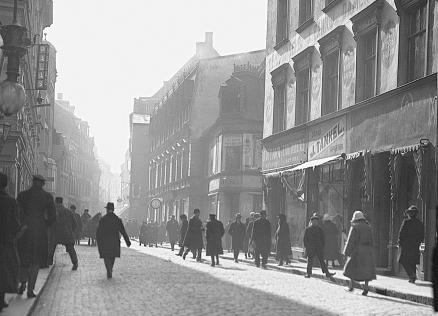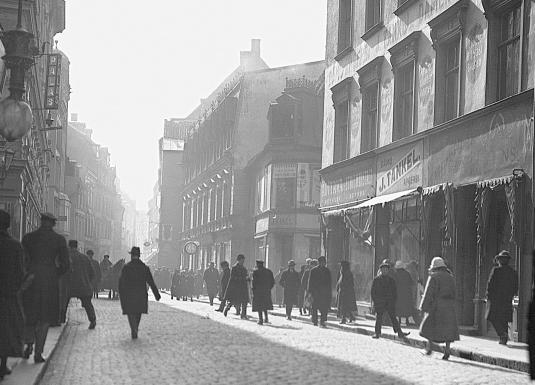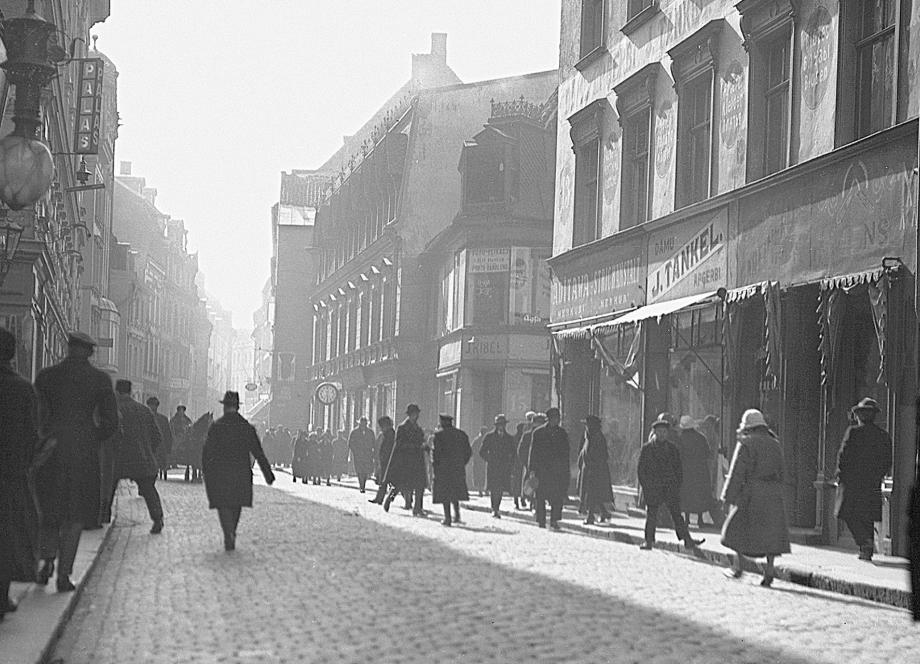
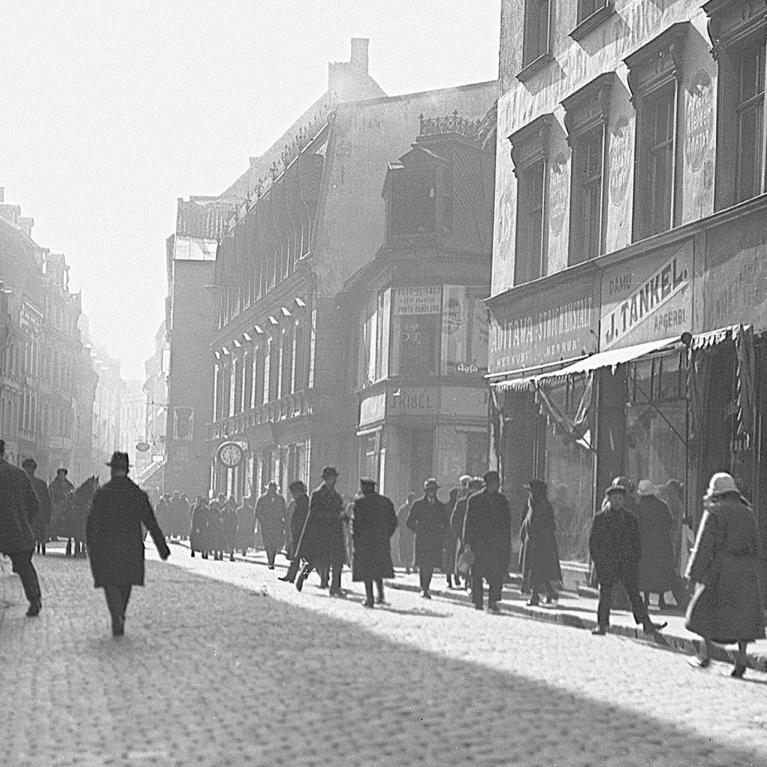
From 31 January to 26 July 2026, the exhibition Wandering the Streets: Urban Visions of Latvian Modernists is taking place in the 4th- and 5th-floor galleries of the main building of the Latvian National Museum of Art in Riga (Jaņa Rozentāla laukums 1) offering insight into the relationships between the city, literature and art in the first decades of the 20th century.
31 January – 26 July 2026
Main building of the Latvian National Museum of Art /
4th Floor Exhibition Halls, Cupola Hall (5th floor)
Jaņa Rozentāla laukums 1, Riga
Media tour of exhibition on 30 January at 12.00
Registration of participants: 11.30–12.00
The first half of the 20th century was a time of rapid change in Latvian and European culture. The exhibition invites visitors to trace the experiences of Latvian writers and artists in three significant cities – Riga, Berlin and Paris. They were flâneurs and flâneuses – leisurely observers of the city who documented modern architecture, traffic, advertising, shop windows, the sounds and rhythms of urban space in texts and images. In a similar way, visitors to the exhibition will wander among the exhibits, sensing the atmosphere of the era and becoming acquainted with its visual language.
Before the First World War, Latvian artists such as Gustavs Šķilters, Jāzeps Grosvalds and others were already strolling the streets of Paris as flâneurs. After the war, they were followed by members of the Riga Artists’ Group and by writers who were eager to share their impressions both in writing and in works of art. Latvian culture became part of the broader current of European Modernism and enriched it. Andrejs Kurcijs composed the poetry cycle The Barbarian in Paris, while Lūcija Zamaiča sold her parents’ house in Latvia in order to live in the French capital for several years and travel elsewhere as well. Berlin, in turn, inspired both the writer Linards Laicens, who devoted odes to its crowds and machinery, and the sculptor Kārlis Zāle, who, together with his apprentice Arnolds Dzirkals and Andrejs Kurcijs, published the first Latvian avant-garde art magazine, Laikmets, in the German metropolis. Alongside the major metropolises of Western Europe, Riga also powerfully inspired the works of Latvian modernist artists, writers and thinkers.
Depictions of the urban environment range from the brightly illuminated Parisian night scenes painted by Ludolfs Liberts, Jānis Tīdemanis’ scenes of city crowds and Ādolfs Zārdiņš’ fantasies, to the ghostly world of workers, street urchins and drifters on the outskirts of Riga in the poetry of Aleksandrs Čaks and Austra Skujiņa, the harsh graphics of the dandy Kārlis Padegs and the surreal description of the Daugava riverbank market in Walter Benjamin’s notes. The combination of literature and art in the exhibition highlights the social and cultural transformations of the era, revealing how Latvian modernists reflected on and interpreted the impressions and dynamics of a changing urban environment.
The exhibition title Wandering the Streets is taken from Lūcija Zamaiča’s 1923 collection of poems. The exposition brings together both canonical and lesser-known artworks, as well as poetic texts, original printed materials, photographs, and video works.
The exhibition has been created in collaboration with the Institute of Literature, Folklore and Art of the University of Latvia as the concluding event of the project Walking Through Time: Flânerie and Modernity in Latvian Interwar Culture (lzp-2022/1-0505; project leader Kārlis Vērdiņš).
The technical solutions for the exhibition are supported by LG – “Art comes alive with LG!”.

Exhibition supporters:
Co-operation partners:
Latvian National Museum of Literature and Music, Latvian National Museum of History, Museum of the History of Riga and Navigation, Aleksandrs Čaks Museum, Ģederts Eliass History and Art Museum of Jelgava, Valmiera Museum, Latvian State Archives of Audiovisual Documents of the National Archives of Latvia, National Library of Latvia, Library of the University of Latvia, Zuzāns Collection, Andris Kļaviņš, Valdis Villerušs, and other private collections, Deutsche Kinemathek (Berlin).
Exhibition concept:
Dr. art. Aija Brasliņa
Head of the Collections and Scientific Research Department
(18th – 1st Half of the 20th Century) /
Latvian National Museum of Art
Ph: (+371) 67 716 118
E:
Dr. philol. Eva Eglāja-Kristsone
Director of the Institute of Literature, Folklore and Art /
University of Latvia
Ieva Kalnača
Head of the Project Management Department /
Latvian National Museum of Art
Ph: (+371) 67 716 123
GSM: (+371) 28 325 624
E:
Artis Ostups
Poet, literary critic, editor of the Punctum magazine
Dr. philol. Kārlis Vērdiņš
Poet, literary scholar
Exhibition design:
Dace Džeriņa
Artist
Graphic design:
Mārtiņš Ratniks
Artist