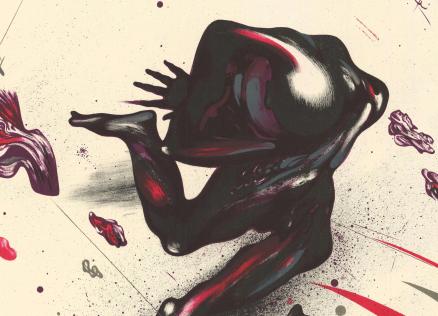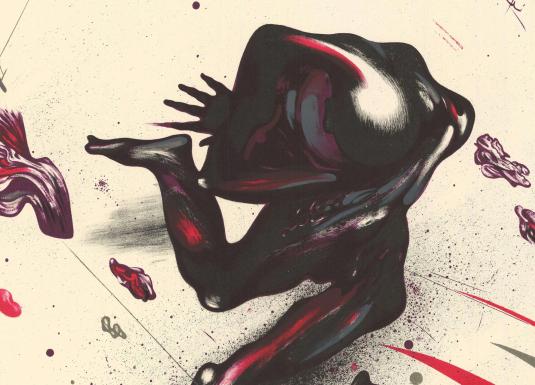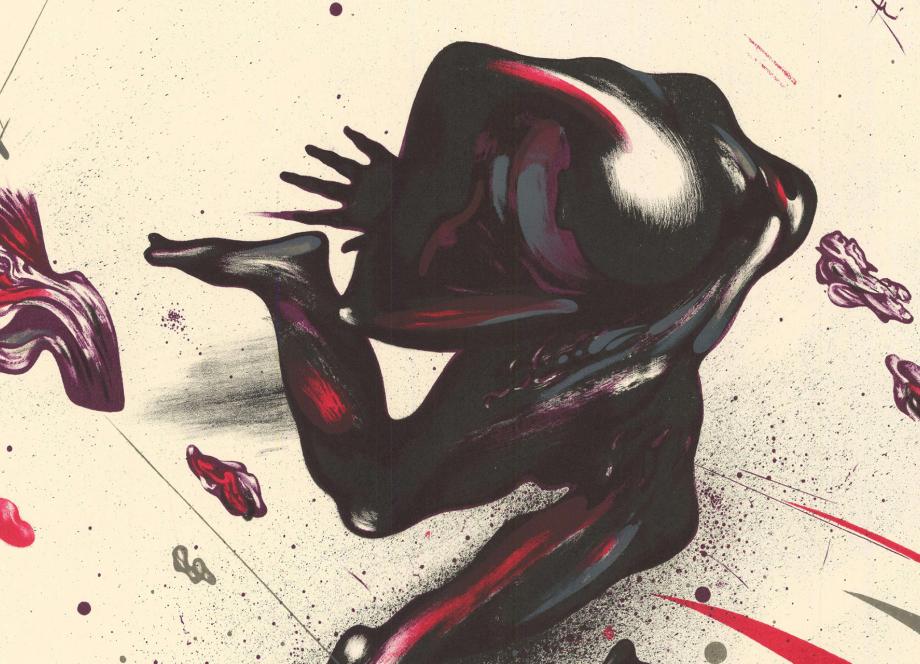
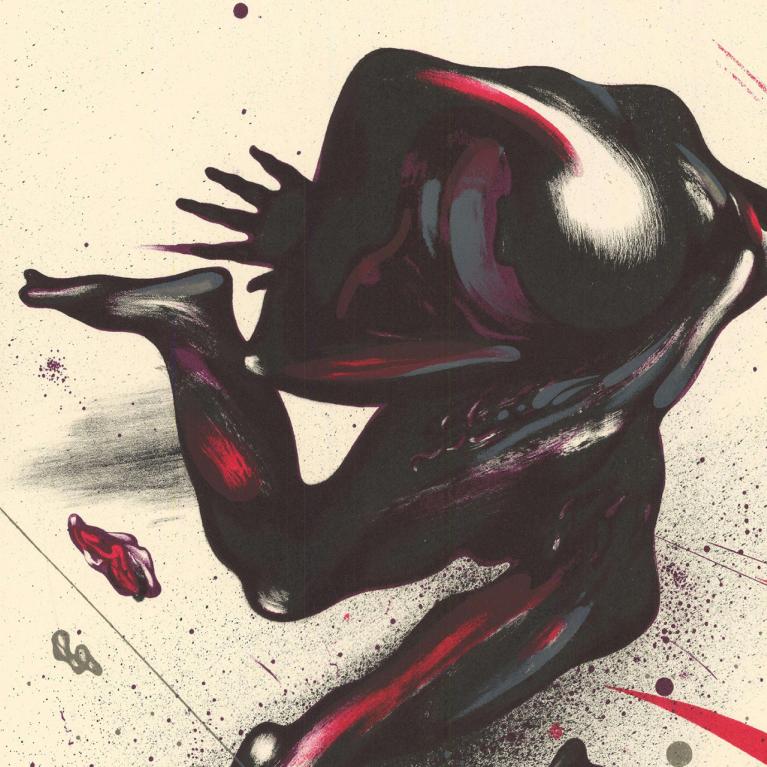
From 14 February to 16 August 2026, as part of The Generation cycle, the exhibition Dreams of Various Length is on view in the right wing galleries of the 2nd floor of the main building of the Latvian National Museum of Art in Riga (Jaņa Rozentāla laukums 1) revealing manifestations of Surrealism in Latvian printmaking during the 1970s and 1980s.
14 February – 16 August 2026
Main building of the Latvian National Museum of Art /
right wing galleries (2nd floor)
Jaņa Rozentāla laukums 1, Riga
Media tour of exhibition on 13 February at 11.00
Registration of participants: 10.30–11.00
The exhibition focuses on interpretations of Surrealism in the oeuvre of eight graphic artists – Māris Ārgalis (1954–2008), Ilmārs Blumbergs (1943–2016), Valija Brence (1941–2009), Maija Dragūne (1945), Arthur Nikitin (1936–2022), Aija Ozoliņa (1932–2023), Māra Rikmane (1939), and Lolita Zikmane (1941). Currently not equally known and studied, these talented authors worked under Soviet occupation in the 1970s and 80s, when Surrealism, alongside Abstractionism, was placed on the list of art directions undesirable to Soviet ideology.
The origins of Surrealism can be found in the early 1920s in Paris and are related to the movement of Dadaism. The birth of the movement is commonly dated to 1924, when French writer and poet André Breton published his first Surrealist Manifesto. The term appeared in the Latvian press already in the mid-1920s, yet in visual art traces of Surrealism came much later – the use of the direction’s characteristic expressive means (biomorphic forms, dreaminess, unexpected combinations of objects, things and characters or their counterpositions, the fusion of time and space, deformation of images or their metamorphosis into other forms) is noticeable in the early 1970s.
This tendency is particularly evident in graphic art, which, in comparison to painting and sculpture, faced less ideological supervision from the Soviet authorities. In Latvian art, Surrealism predominantly manifested itself in the adoption of formal means of expression and not deliberate adherence to the principles cultivated by the surrealists of the interwar period.
In the early seventies, an upswing can be observed in Latvian graphic art: the Tallinn Print Triennial was established in 1968, bringing together the best graphic artists from the Baltic states. Initiated in 1969, the annual fine art graphics exhibitions also became highly anticipated. Thematic exhibitions Literary Images in Fine Art Graphics were held. Of essential importance in the context of Surrealism was the series of exhibitions of graphic art under the title Science and Science Fiction initiated in 1975 at the Republican House of Knowledge, or Planetarium (today – Riga Nativity of Christ Orthodox Cathedral). The significance of these exhibitions has been stressed by Ilmārs Blumbergs: “The title Science and Science Fiction provided the opportunity to exhibit all kinds of things. Absolutely everything. It was freedom. That exhibition was anticipated. From a formal perspective, Surrealism determined my means of expression.”*
The title of this certain exhibition refers to Ojārs Vācietis’ 1974 poetry collection Visāda garuma stundas [Hours of Various Length]. Regarding the book’s concluding work, Klavierkoncerts [The Piano Concert], Vācietis has said that it was his attempt to uncover the substance of the creative process’ origin, where magic is present at the moment of creation, which the poet likens to a dreamy mood. Dreams, their interpretation and Sigmund Freud’s teaching about the unconscious played a crucial role in the beginnings of the movement. By merging dream and reality, the surrealists hoped to gain access to a new reality, or surreality. The interplay with poetry is a conscious nod which emphasises the poetically imaginative nature of this direction in Latvian art.
Unlike all previous expositions in The Generation cycle, which were usually dedicated to the heritage of individual masters, this is a group exhibition, and it highlights a specific medium – printmaking, based on research of the museum’s collection. To give a broader insight into the creative output of the featured graphic artists, works from the LNMA collection are supplemented by pieces from other sources, including the Art Collection of the National Library of Latvia, the Museum of the Artists’ Union of Latvia and the Blumbergs Foundation.
Text by Monta Cimdiņa
* Es nemiršu. Ilmārs Blumbergs. [I Won’t Die. Ilmārs Blumbergs]. Comp. by Anita Vanaga. Riga: AV, 2013 – p. 46
About the exhibition cycle The Generation
Each generation belongs to an era. The Latvian National Museum of Art’s (LNMA) exhibition cycle The Generation began in 2016, focusing on art of the second half of the 20th century. The cycle’s programme is realised in the 4th Floor Exhibition Halls and since 2021 also in the right wing exposition halls on the 2nd floor of the main building of LNMA. The exhibitions devoted to many important figures in Latvian art have been held, such as Boriss Bērziņš, Felicita Pauļuka, Daina Riņķe, Henrijs Klēbahs, Līvija Endzelīna, Hilda Vīka, Gunārs Krollis, Džemma Skulme, Romualds Geikins, Daina Dagnija, Jānis Pauļuks, Māra Kažociņa, Inta Celmiņa, Auseklis Baušķenieks, Gunārs Cīlītis, Jānis Aivars Karlovs, Biruta Baumane, Lea Dāvidova-Medene, Imants Vecozols, Rūsiņš Rozīte, Biruta Delle, Aija Jurjāne, Rolands Kaņeps, Gunārs Binde, Līga Purmale. There are exhibitions in preparation for Māra Vaičunas and Aija Ozoliņa.
Exhibition supporters:
State Culture Capital Foundation of Latvia
Vivacolor
AS Latvijas Finieris
Exhibition curator:
Monta Cimdiņa
Curator of the Graphic Art Collection
(2nd half of the 20th century – 21st century) /
Latvian National Museum of Art
Ph: (+371) 67 357 522
E:
Exhibition and graphic design:
Rūta Jumīte
Multidisciplinary designer
Education programme:
Alise Hofmane
Curator of Education /
Latvian National Museum of Art
Curator of the exhibition cycle The Generation:
Dr. art. Elita Ansone
Head of Collections and Scientific Research Department ARSENĀLS
(2nd Half of the 20th – 21st Century) /
Latvian National Museum of Art
Ph: (+371) 67 357 521
E: